

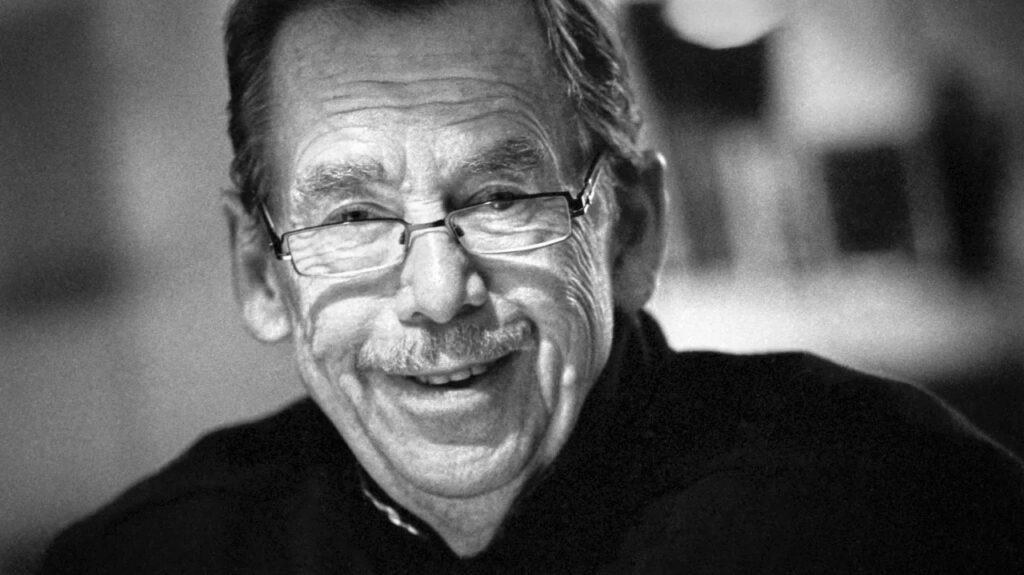
Václav Havel never sounded like a ruler. That was precisely his power. In a century defined by loud ideologies, loud politics, Havel’s voice emerged without force, without certainty, without performance. He talked like a writer who had been thrust into politics, not like a politician who had discovered the power of the written word. The opposition between these two styles influenced not only the way Havel spoke but also the way Czechoslovak politics changed under his rule.
In a country under communist rule, language was infused with slogans. The language of authority repeated itself ad infinitum and reduced all meaning to a ritual. Havel realized that regimes are also fueled, not only by oppression, but by linguistic degeneration. Havel’s resistance came not from mobilizing a mass movement, but demanding simple truth.
Havel’s essays and speeches avoided grand rhetoric. They identified the daily lies, compromises, and habits through which authoritarianism became entrenched. He argued that to “live within the truth” is not a heroic but a necessary action. This created a framework for resistance in which it was lacking most spectacularly. It made integrity sound mundane—and therefore frightening.
When the Velvet Revolution began, Havel’s voice was a stark contrast to the bombast of the ancien regime. He did not promise a utopia. He was aware of uncertainties. His language was not one of command but humility. In a land where certainties were imposed upon certainties, this was subversive. It gave credence to language again.
Yet as a leader, Havel felt uneasy about the concept of power. His speeches sometimes took on an introspective, even hesitant tone. Some interpreted this as a sign of weakness, but the crowds saw something probably far less common still: the authenticity of his message without the domination that came with it. He spoke not to conquer his opponents, but to awaken the citizenry to the power within themselves. To be a leader, to be a statesman, was to be a role that weighed heavily on his shoulders
Havel’s style defies one of the most basic presumptions about authority—namely, that to be effective, authority must sound confident. His voice modeled another way to think, in which authority derives from the harmony between language and life. His words mattered in part because they were not exaggerated by desire to be important.
This type of voice is difficult in contemporary media landscapes. It does not simplify well. It does not sound bite well. It requires a listener to listen—does not reassure, but rather encourages reflection. And all of that is precisely what keeps it alive. No one remembers Havel’s speeches as being exciting, exactly; they remember them as being honest.
His legacy is proof that, more often than not, truth doesn’t require magnification. It needs protection from perversion. The quiet voice, rooted in personal conviction, can transcend much louder cries based on necessity or egocentrism. Mr. Havel never defeated power with language. He disarmed it by eschewing imitation.
In an age in which leadership is equated with presence and volume, the voice of Havel provides an intriguing contrast.
Authority does not have to shout to be authentic.
Sometimes, the most enduring leadership is done softly enough that truth is not ruined in the telling.

Articles

The Rise of Women Keynote Speakers Transforming Global Leadership
In today’s rapidly evolving world, leadership is no longer defined by traditional stereotypes. Organizations across industries are embracing diversity, innovation, and inclusive leadership, and one